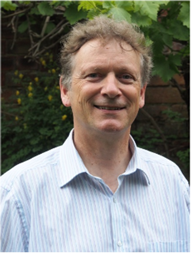
Maharshi Dhada is a third year PhD student at the Engineering Department in the University of Cambridge.
He is developing statistical hierarchical models to enable collaborative prognosis in a fleet of industrial assets. His research is funded by the EPSRC-BT partnership project Next Generation Converged Digital Infrastructure, where he works with BT to predict operations critical alarms in the 4G-LTE base stations.
Before coming to Cambridge, Maharshi received his Bachelor of Technology degree from the Indian Institute of Technology Indore in 2018, and has worked with several industries including Siemens, Scania CV, and Network Rail for applications of his research ideas. He has presented/ published in 9 conferences and 5 peer-reviewed journals.
My Research - I am a 3rd year PhD student in the network research group at Lancaster University. Starting out with developing an Operating System as part of my undergraduate thesis, I was introduced to the unikernel research domain. Unikernels are specialised Operating Systems that are bespoke to the function they target, in the case of my work, Network Function Virtualisation. My research investigates the challenges unikernels face when being integrated into an ever more heterogenous infrastructure.
My Role - Working with the network research group PhD team at Lancaster (Alex and Paul), my work sits comfortably between the unikernel system research done by Alex and the network service intents work done by Paul. Bringing these together though an automation architecture is my place in the system. Being able to automate the deployment and life of unikernel based network services also aides other NG-CDI areas such as intent based networking.
Vision for the Future - Network infrastructure is constantly showing its ability to evolve. The recent evolution towards an autonomous dynamic software-based infrastructure could not be a better home for unikernel technologies. However, to best leverage both the commodity hardware network infrastructure and the minimal resource footprint of a typical unikernel VNF, datacentre management platforms must embrace a less centralised approach. If NG-CDI helps achieve this, unikernel µVNFs may not only find a place within datacentres but bring further agility to edge and fog computing too.
Malcolm has BSc in Pharmacology/Biochemistry and a PhD in Neuropharmacology. He has worked in the pharmaceutical industry for over 40 years and gained a wide breadth of experience in management of research activities. Part of his former role as a research leader in a Neuropharmacology department involved co-supervising collaborations with academics in the UK, Europe and USA. He has over 60 publications including articles on the interface between industry and academia.
He coordinates Academic Liaison at GSK, managing staff in the US and UK. His role involves close liaison with several groups outside the Company for example government departments, research and funding councils, biotechnology companies and other science-driven organisations. He sits on many external bodies including the REF2021 Main Panel A, UKRI Infrastructure Advisory Committee and the BBSRC Council. He also chairs several groups including the Diamond (Synchrotron) Industrial Advisory Board, the Science Industry Partnership for apprenticeships and the ABPI strategic leadership group for Academic Collaboration, Education & Skills (ACES).
Malcolm was awarded a CBE in the 2009 Queen’s Birthday Honours in recognition of his contribution to the pharmaceutical industry as well as an Honorary Professorship from the University of Birmingham and an honorary DSc from the University of Hertfordshire. Malcolm was elected as a Fellow into the Faculty of Medicine at Imperial College London in 2011 and an honorary fellow to the British Pharmacological Society in 2020. LinkedIn
Dr Alastair McGibbon, Head of Collaborative R&D at the Compound Semiconductor Applications (CSA) Catapult.
Alastair has over 35 years experience in the advanced electronics R&D, both in academia (Glasgow, Cambridge and the US) and industry (Singapore and the UK)
He has spent much of the last 15 years working across UK Advanced Electronics Supply Chains helping to build UK capability and capacity, building bridges between academic research and industrial exploitation.
In his current role at the CSA Catapult, he has a strong focus on helping companies in Advanced Communications, Power Management for Net Zero and Intelligent Sensing by exploiting cross-sectoral opportunities for non-silicon-based electronics systems.
Fun Fact: I Walk. A lot. At least 10 miles a day if I can.
Stephen Cassidy, BT, is the industrial lead for the NG-CDI project..
He has a particular interest in the relationship between people, information technology and organisational structure and how they determine enterprise culture and effectiveness. This multi-disciplinary programme combines research into AI, data-driven decision tools, self-learning systems, human behaviour and culture.
Stephen will be leading the Fireside chat with Prof Nicholas Race and Prof Ning Wang and the panel of Postgraduate researchers.
Fireside chat
Prof Nicholas Race is the academic lead for the NG-CDI project, a EPSRC/BT funded project that aims to develop a future network that is “autonomic”, with the capability to react and reconfigure infrastructure accordingly with minimal human intervention.
He is Professor of Networked Systems at Lancaster University and his research focuses is on developing future networking services built upon Software Defined Networks and Network Functions Virtualisation. This includes new techniques to enhance the Quality of Experience of media streaming and support for the detection and remediation of network anomalies.
Prof. Ning Wang received his B.Eng degree in computing from Changchun University of Science and Technology, China in 1996 and M.Eng degree in electronic engineering from Nanyang Technological University, Singapore in 2000 respectively. He obtained his Ph.D degree in electronic engineering from the Centre for Communication Systems Research (CCSR, currently known as the Institute of Communication Systems - ICS), University of Surrey, UK in 2004.
Please use the opportunity and ask your questions in chat during the session, e.g. about NG-CDI, the experience as a Postgraduate researcher, the insights that come from a major project like NG-CDI and more.
Dr Ken Reid Ken is a research associate at Michigan State University, focusing on the application of evolutionary algorithmic techniques to genomic prediction in animals and humans.
Ken completed his Ph.D. in 2019 in partnership with British Telecommunications, exploring the use of metaheuristics to solve real-world employee scheduling problems.